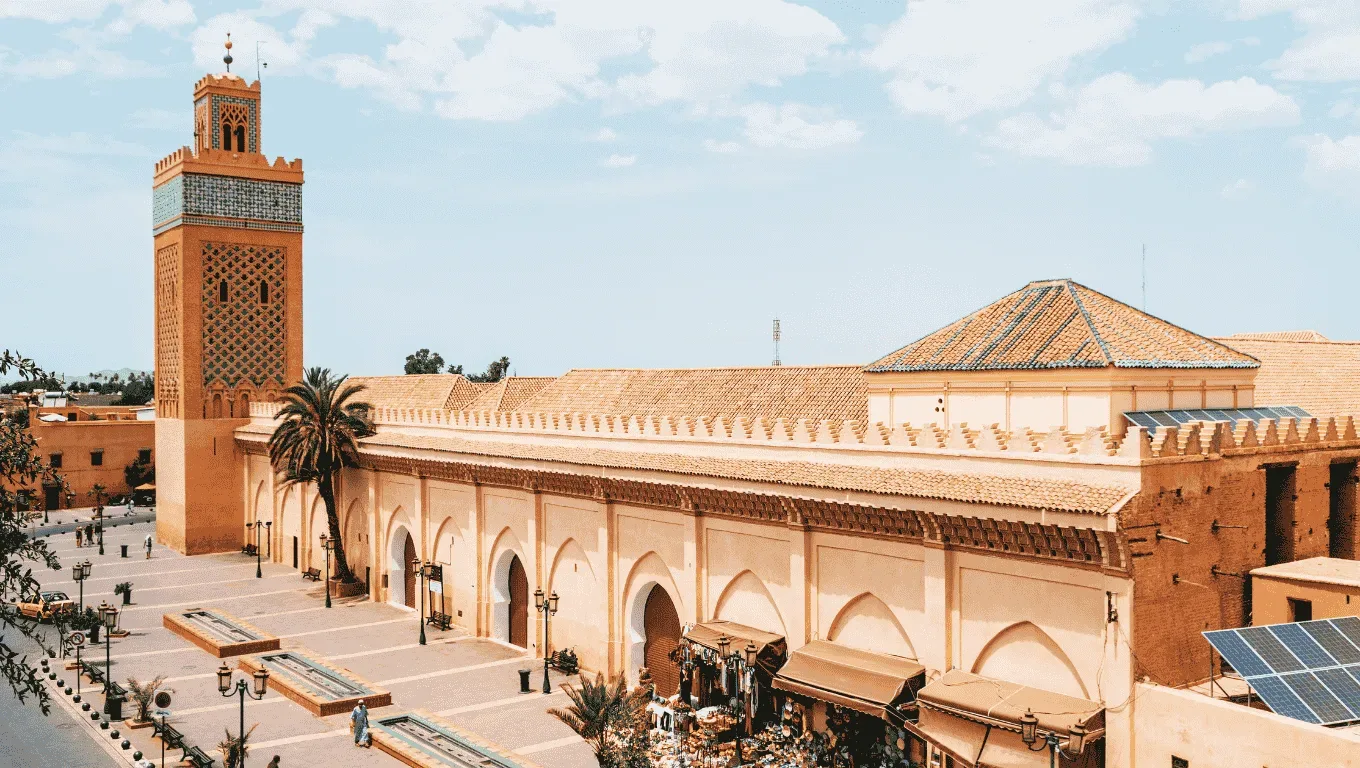
Ask when to visit Morocco and most guides will give you the same two words: spring and autumn. They are not wrong. But that answer treats Morocco as one place with one climate, and it is not. In a single journey you can wake to frost in the High Atlas, lunch in the warmth of a Marrakech courtyard, watch the sun set over Saharan dunes and finish the week with Atlantic wind in your hair in Essaouira.
Our team is based in Marrakech, and we plan journeys across Morocco in every month of the year. So rather than a single “best time”, this guide explains how the country actually behaves season by season, what each month is genuinely good for, and how to match the timing to the trip you have in mind.
The short answer
If you want comfortable temperatures almost everywhere, aim for late March to May or late September to November. These are the months when the imperial cities are pleasant for walking, the desert is warm by day and cool by night, and the mountains are green or golden rather than snowbound.
But winter is excellent for clear skies, quieter medinas and even skiing in the Atlas, and summer works beautifully if you build the journey around the coast and the mountains rather than the interior. The right month depends on where you want to go and what you want to feel when you get there.
Four climates in one country
Before looking at the calendar, it helps to understand that Morocco has four broad climate zones, and most journeys pass through at least three of them.
- The imperial cities and interior plains (Marrakech, Fes, Meknes): mild winters, warm springs and autumns, and genuinely hot summers.
- The mountains (High Atlas, Middle Atlas, Rif): cold, often snowy winters at altitude; fresh, green springs; pleasant summer days that offer an escape from the heat below.
- The desert (Merzouga, Zagora and the pre-Saharan valleys): warm, bright days for much of the year, but with dramatic swings between day and night. Winter nights can drop close to freezing.
- The Atlantic coast (Casablanca, Rabat, Essaouira): moderated by the ocean, rarely very hot or very cold, and often breezy.
Good timing is really about sequencing: being in each of these places at the right moment.
Winter: December to February
December brings crisp, sunny days in Marrakech and Fes, with cool evenings that make a fire-lit riad salon feel exactly right. It is a lovely month for the cities, especially in the first half before the festive-season arrivals. In the desert, days are mild and bright, but nights under canvas are cold; good camps provide heating and heavy blankets, and you will be glad of them.
January is the quietest month of the year. The light is clear, the snow-capped Atlas forms a backdrop to Marrakech and the medinas move at a slower, more local pace. This is also when snow is most reliable in the High Atlas, and the ski area at Oukaïmeden, above Marrakech, typically comes to life when the season is good. Pack properly warm layers: Moroccan houses are built to stay cool, not to stay warm.
February starts to soften. Days lengthen, the first almond blossom appears in the valleys of the Anti-Atlas and the countryside begins to green. In 2027, February also brings the start of Ramadan (more on that below), which subtly changes the rhythm of daily life.
Best for: city-focused journeys, photography, quiet medinas, Atlas snow and travellers who prefer crisp air to heat.
Spring: March to May
March is one of our favourite months. The High Atlas valleys turn green, rivers run with snowmelt and the temperatures in Marrakech and Fes are ideal for long days on foot. The desert is at its most comfortable, warm in the afternoon without the intensity of later months.
April continues in the same spirit and is, for many travellers, the ideal month to see the whole country in one journey. Gardens in Marrakech are in flower, the Middle Atlas cedar forests are fresh and the Atlantic coast is pleasant. It is also popular, so riads and the best desert camps should be reserved well in advance, particularly around European Easter holidays.
May is the month of roses. In the Dadès Valley around Kelaat M’Gouna, the harvest of the Damask rose fills the valley with scent, and the town traditionally celebrates with its rose festival. Days in Marrakech and the desert begin to warm noticeably by the end of the month, so plan desert time earlier in the journey and the coast later.
Best for: first-time visitors, grand circuits that combine cities, mountains and desert, walking and gardens.
Summer: June to August
June is still very workable. Essaouira usually hosts the Gnaoua World Music Festival around this time, when the old port town fills with music from across Africa and beyond. Inland, mornings and evenings are lovely, but midday heat is building.
July and August are hot inland. Marrakech regularly reaches the high thirties Celsius and can exceed forty, and the desert is fierce in the middle of the day. Yet summer has real strengths if the journey is planned around them. The Atlantic coast stays fresh thanks to the ocean and the trade winds, and Essaouira in particular is pleasantly cool. The High Atlas offers green valleys, walnut trees and mild days at altitude. In the cities, the trick is to live as Moroccans do: early mornings, long, shaded afternoons by a riad pool and evenings outdoors when the air cools.
Summer is also when Moroccan families travel and many Moroccans living abroad return home, so coastal towns are lively and domestic transport is busier.
Best for: coastal journeys, the High Atlas, families travelling in school holidays, and anyone happy to slow the pace.
Autumn: September to November
September begins hot but eases steadily. By the second half of the month, the cities become comfortable again and the light takes on a warmer, golden tone.
October is arguably the most balanced month of the year. The desert is comfortable by day and pleasantly cool at night, the cities are ideal for exploring on foot, and the date harvest is under way in the palm groves of the south-east, with the town of Erfoud traditionally marking it with a date festival.
November brings cooler evenings and the first snows on the highest Atlas peaks, often under bright blue skies. It is a wonderful month for the imperial cities and the desert, and noticeably quieter than spring. Late in the month, Marrakech also hosts its international film festival.
Best for: desert journeys, imperial cities, travellers who want spring-like conditions with fewer people.
Travelling during Ramadan
Ramadan follows the lunar calendar and moves about eleven days earlier each year. In 2027 it is expected to begin around 8 February and end with Eid al-Fitr around 9 March, although the exact dates in Morocco depend on the official sighting of the new moon.
Many travellers worry that Ramadan will limit their trip. In our experience, it rarely does, and for some it becomes a highlight. Hotels, riads and restaurants catering to visitors continue to serve food during the day, and sights remain open, though some museums and monuments may keep shorter hours. Daily life runs at a gentler pace in the afternoon, and then, at sunset, the streets come alive as families break the fast together. Evenings during Ramadan have an atmosphere you will not find at any other time of year.
A few simple courtesies go a long way: avoid eating, drinking or smoking openly in the street during daylight hours, particularly in smaller towns, and allow a little extra flexibility around sunset, when drivers, guides and shopkeepers are heading home to eat. With good planning, Ramadan simply becomes part of the journey’s character.
Matching the season to your journey
Because each region peaks at a different time, the best itineraries are shaped around the season rather than squeezed into it.
- Spring and autumn suit the full circuit: imperial cities, the Middle Atlas, the Sahara and the blue streets of Chefchaouen. This is the natural season for our Morocco Grand Circuit and Morocco Beyond the Ordinary journeys.
- Winter is ideal for city-led journeys with mountain and snow experiences, such as our Morocco in Winter itinerary, which pairs the Atlas with Marrakech and the imperial cities.
- Summer favours the Atlantic: a journey such as The Amber Road, combining the imperial cities with Rabat, Essaouira and the coast, keeps you close to the cooling ocean.
- Short breaks work in almost any month. A few days in Marrakech with a night in the desert, as in Morocco in 5 Days, can be timed around the desert’s most comfortable hours whatever the season.
On a tailor-made journey, we also adjust the order of the route to the calendar: desert first in late spring before the heat builds, coast last in summer, cities in the cool of the morning and mountains in the warmth of the day.
The real best time to visit Morocco
Every season in Morocco has a reason to go. Winter offers clear light and snow on the Atlas; spring brings green valleys and roses; summer belongs to the coast and the mountains; autumn delivers golden days and comfortable desert nights. The best time to visit is the one that fits the journey you want to take, planned by people who know how the country feels in each of those months.
If you are considering a journey to Morocco and would like help choosing your moment, our Marrakech team is happy to talk it through with you.
Plan this journey
Want to travel this route with us?
Our specialists will shape a private itinerary around your dates, pace and interests.
Plan my trip