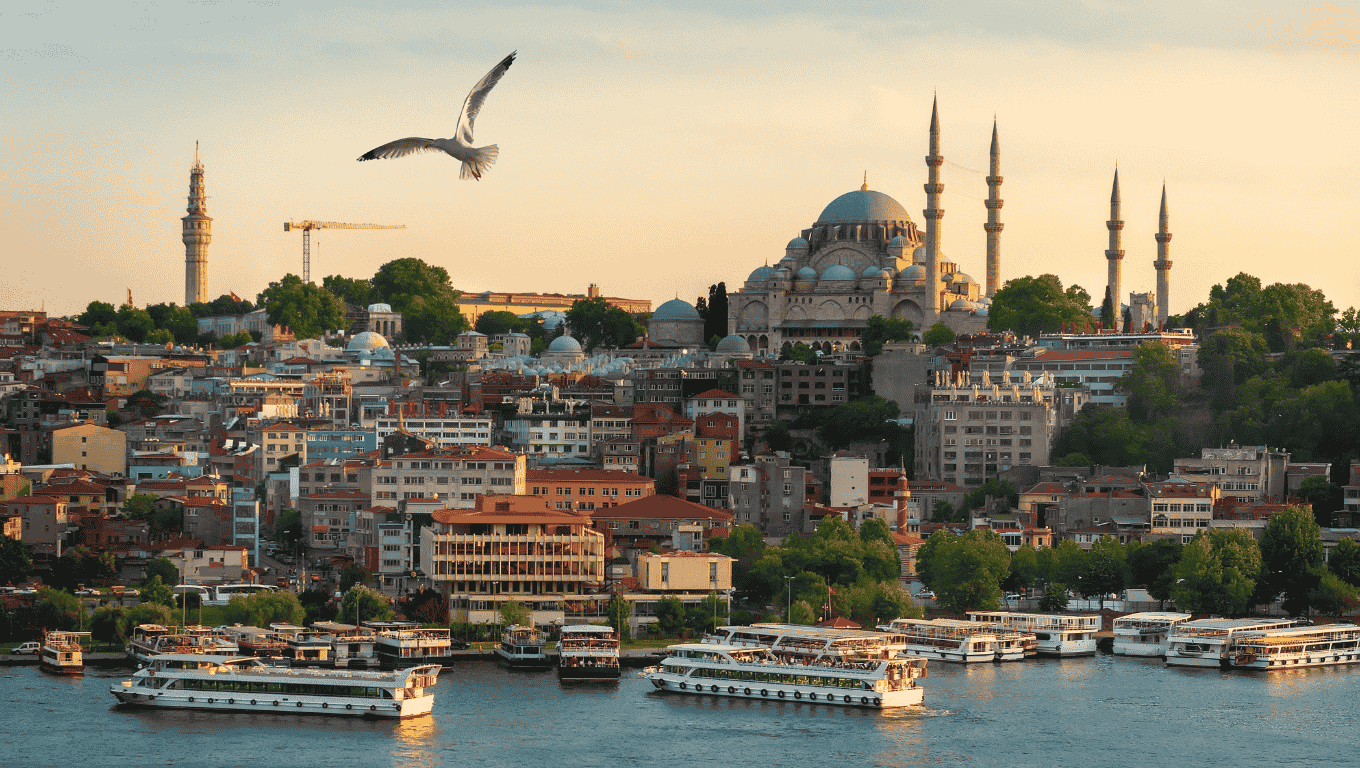
There is a reason first-time visitors to Istanbul are drawn to the same places. Hagia Sophia, Topkapı Palace, the Blue Mosque and the Grand Bazaar have witnessed centuries of imperial ambition, religious change and everyday city life. Together, they form part of one of the world’s most remarkable historic landscapes.
But Istanbul is not a city that reveals itself through monuments alone. Its real charm often appears between the major sights: in the clatter of teaspoons on a ferry, the smell of bread drifting from a neighbourhood bakery, the call of seagulls over the Bosphorus or an unplanned lunch that lasts well into the afternoon. The city’s UNESCO-listed historic areas preserve exceptional examples of Byzantine and Ottoman architecture, from monumental mosques and palaces to cisterns, churches and defensive walls. Yet Istanbul is also a living city spread across two continents, made up of neighbourhoods with their own rhythms and personalities. (UNESCO World Heritage Centre)
Once you have admired the famous skyline, here are seven ways to discover the Istanbul that exists beyond the postcard.
Take the commuter ferry instead of a sightseeing cruise
Few cities make public transport feel quite so cinematic. Board a regular passenger ferry and Istanbul begins to rearrange itself around you. Minarets rise above the Historic Peninsula, fishing boats cross the water and tea arrives in small tulip-shaped glasses as Europe slowly gives way to Asia. The ferries are not simply a way of getting around. They are part of daily life. Office workers, students, families and visitors share the same open decks, often accompanied by a determined flock of seagulls. For an easy first crossing, travel between Eminönü or Karaköy and Kadıköy. For a quieter journey, continue towards Üsküdar or one of the smaller Bosphorus neighbourhoods. Istanbul’s public ferry network also operates dedicated short and long Bosphorus routes, but even an ordinary commuter crossing provides one of the city’s finest views. (Şehir Hatları) There is no need to rush. Order a tea, find a seat outside and let the city come to you.
Trade the crowds of Sultanahmet for the backstreets of Fener and Balat
Fener and Balat have become increasingly popular, but they still offer a very different atmosphere from Istanbul’s monumental centre. These neighbouring districts unfold through steep lanes, weathered façades, small workshops, historic religious buildings and rows of colourful houses. Greek Orthodox, Jewish and Muslim communities have all contributed to the area’s layered identity, creating a streetscape where different chapters of Istanbul’s history sit close together. The pleasure here comes from wandering rather than following a strict route. Turn away from the busiest photo stops and you may find a traditional bakery, a family-run café or a neighbourhood market continuing much as it has for generations.
Visit in the morning, before the café tables fill, then walk along the Golden Horn or continue uphill towards the historic districts of Zeyrek and Fatih. Fener and Balat are recognised among Istanbul’s notable cultural neighbourhoods, while restored houses in the area also feature in UNESCO’s documentation of the historic city. (Go Türkiye)
Slow down in Kuzguncuk
On the Asian shore, Kuzguncuk feels almost like a small town that has been absorbed into the city without entirely surrendering its character. Its streets are lined with wooden houses, independent cafés, neighbourhood shops and small gardens. Places of worship belonging to different communities stand within walking distance of one another, reflecting the multicultural history of the district. There is no major attraction demanding your attention here, which is precisely the point. Come for breakfast or a late lunch, browse the side streets and sit beneath the trees with coffee. Kuzguncuk rewards travellers who enjoy observing a place rather than consuming it. It is one of several distinctive Asian-side neighbourhoods highlighted by Istanbul’s official destination guide. (Go Türkiye) Afterwards, walk towards Üsküdar and watch the evening light settle over the domes and minarets across the water.
Eat your way through Kadıköy
The European side may have the city’s most famous monuments, but many Istanbul residents cross to Asia when they want to eat well. Kadıköy’s market district is a lively concentration of fishmongers, spice shops, delicatessens, bakeries, traditional restaurants and contemporary kitchens. Rather than planning one formal meal, arrive hungry and try a little of everything. Begin with freshly baked pastries or a crisp simit. Stop for olives, local cheeses and seasonal fruit. Continue with stuffed mussels, grilled fish, meze or one of the many regional dishes that have found a home in the neighbourhood. Then walk towards Moda, where tea gardens, ice cream shops and waterfront paths encourage a slower pace. Kadıköy and Moda are both among the city’s established cultural and leisure districts, offering an easy introduction to everyday life on Istanbul’s Asian side. (Go Türkiye) This is not the Istanbul of grand imperial dining rooms. It is sociable, informal and constantly changing.
Look beyond the Blue Mosque to Süleymaniye and Zeyrek
The Blue Mosque deserves its fame, but it is not the only place from which to appreciate Istanbul’s religious architecture and historic skyline. The Süleymaniye Mosque rises above the old city with a calm confidence. Designed for Sultan Süleyman the Magnificent, its courtyards and terraces offer sweeping views towards the Golden Horn and Bosphorus. The surrounding streets still contain traditional eateries, small shops and traces of the social complex that once served the wider community. From here, continue towards Zeyrek, an area of steep roads, timber houses and historic structures. Both Süleymaniye and Zeyrek form part of the UNESCO-listed Historic Areas of Istanbul, alongside Sultanahmet and the city’s land walls. (UNESCO World Heritage Centre) These districts provide something increasingly rare in a major city: the chance to move through architecture on a monumental scale and, moments later, find yourself on an ordinary residential street where laundry hangs from balconies and neighbours talk across open windows.
Follow the Bosphorus north
Many visitors see the Bosphorus from a boat and assume they have experienced it. Yet some of the strait’s most appealing corners are best explored from the shore. Begin around Beşiktaş or Ortaköy and travel north through neighbourhoods such as Arnavutköy, Bebek and Emirgan. The route passes Ottoman waterfront mansions, palaces, mosques, parks and the stone silhouette of Rumeli Fortress. Each neighbourhood has its own reason to stop. Arnavutköy has elegant waterside architecture and seafood restaurants. Bebek is suited to a slow walk with coffee or ice cream. Emirgan offers green spaces and broad views across the water. The Bosphorus connects the Black Sea with the Sea of Marmara while separating Istanbul’s European and Asian shores. Along its banks, layers of imperial history exist beside cafés, fishing spots and modern homes. (Turkish Airlines Blog) Come in the late afternoon, when the light softens and the city begins to glow across the water.
Leave the city without leaving Istanbul
When Istanbul feels too intense, do what generations of residents have done and escape to the Princes’ Islands. A ferry journey across the Sea of Marmara leads to an archipelago where pine trees, historic villas and quiet streets replace the traffic and towers of the mainland. Büyükada is the largest and best known, while Heybeliada, Burgazada and Kınalıada each offer their own atmosphere. The islands are officially recognised among Istanbul’s principal destinations. (Go Türkiye) Walk or cycle away from the ferry terminal, explore residential lanes and stop for a leisurely seafood lunch near the water. In summer, small beaches and coves provide a chance to swim; in spring and autumn, the cooler weather is ideal for exploring on foot. Although the skyline of mainland Istanbul remains visible in the distance, the islands move at a gentler pace. They are a reminder that this vast metropolis still contains pockets of genuine stillness.
Istanbul is best experienced in layers
It would be a mistake to visit Istanbul and ignore its great monuments. Hagia Sophia, the ancient Hippodrome and the Süleymaniye Mosque are among the architectural masterpieces that reflect the city’s importance for more than two millennia. (UNESCO World Heritage Centre) But it would be equally unfortunate to see only those places. Istanbul becomes more rewarding when you leave room for small discoveries: a ferry chosen without checking the destination, a market stall recommended by a local guide, an unfamiliar neighbourhood or a table beside the Bosphorus where lunch takes longer than expected. The essential sights may introduce you to Istanbul’s history. Its ferries, backstreets, neighbourhoods and people are what allow you to feel the city itself.